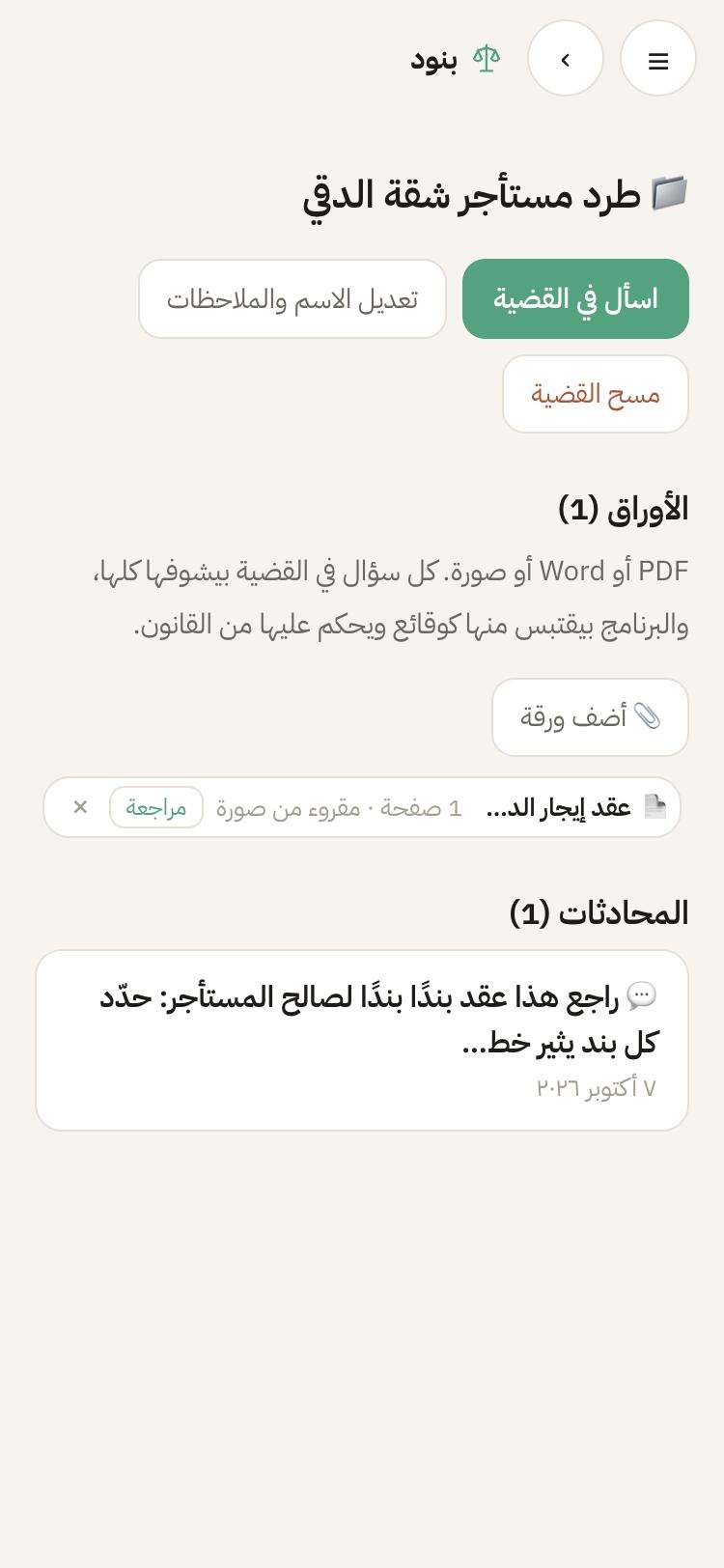
A legal research assistant for lawyers and citizens. It answers only from the text of Egyptian statutes and Court of Cassation rulings; every rule in an answer carries a verbatim quote of its article, with number and law, checked mechanically before it reaches you. Where no text supports a point, it says so.
Egyptian legal text is scattered: statutes amended dozens of times, repealed articles still republished as if in force, and the Cassation rulings that interpret them buried in scanned archives. A lawyer searches for hours before a hearing; a citizen acts on something they heard.
General chatbots made it worse: they state an article number with full confidence, and the number is wrong. In law a mistake is not a software bug; a person acts on it.
So we built the text base first, then an assistant forbidden from answering from memory: every rule it states must be a verbatim quote of a text we hold, or it is not stated.
Five steps, each one code that is measured, not a promise in a prompt.
It reads the question and facts and lists the legal issues they raise, the way a lawyer plans before research: the rule, its conditions, the deadline, the defence, the penalty.
Semantic and lexical search together, inside the laws that govern the issue and the Cassation rulings that interpret them, preferring the newer text over the older.
One writer per issue sees only that issue's texts, so no article is confused with another.
Every quote is matched character by character against the article. A rule with no supporting text is removed from the answer, and a second checker asks whether the article really says what was attributed to it.
A fact the ruling depends on that you did not give becomes a question to you, and the answer is stated as conditional on it.
Real screenshots of today's running version, not mockups.
A whole question in 15 secondsFrom typing to the sources, as it really happens · Download the video
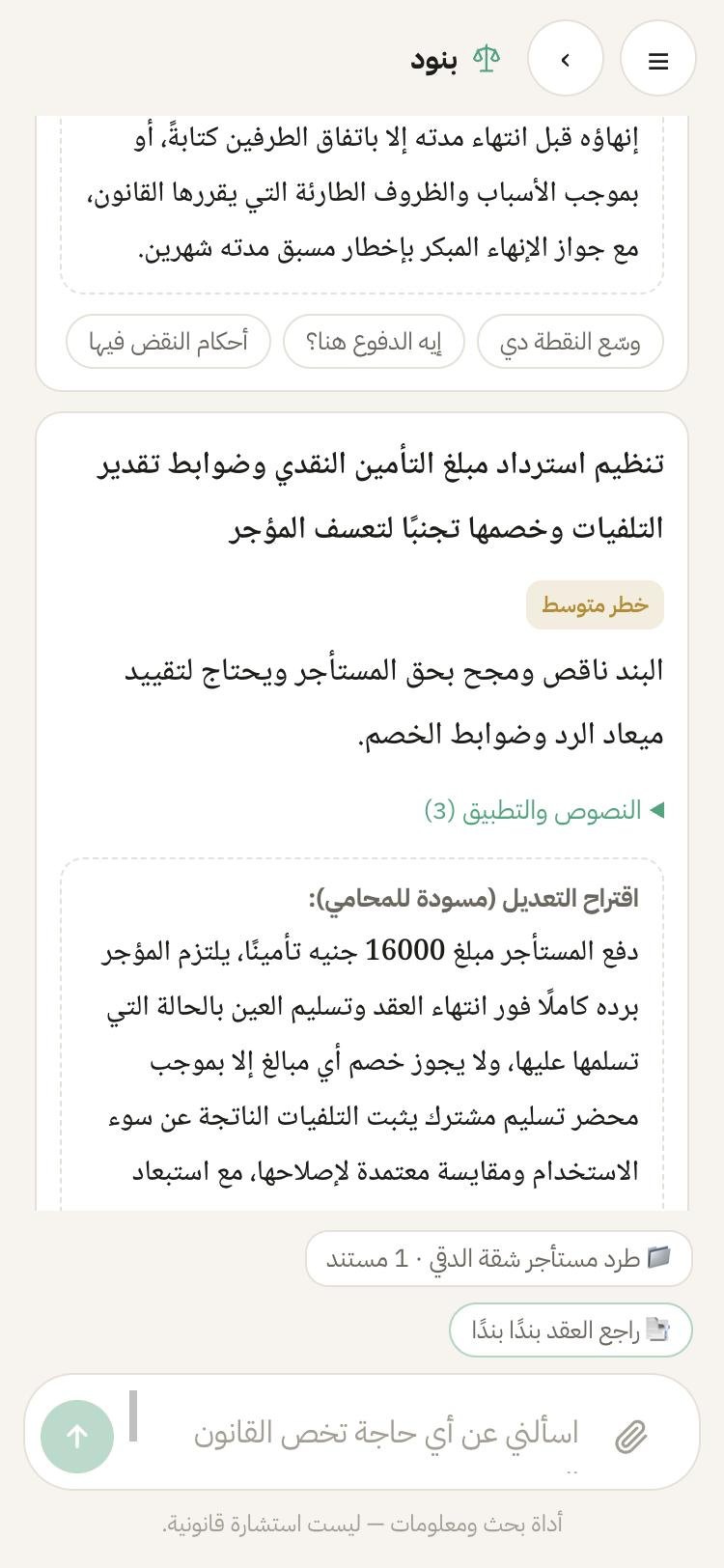
Case folderA case's papers and conversations in one place, stored encrypted
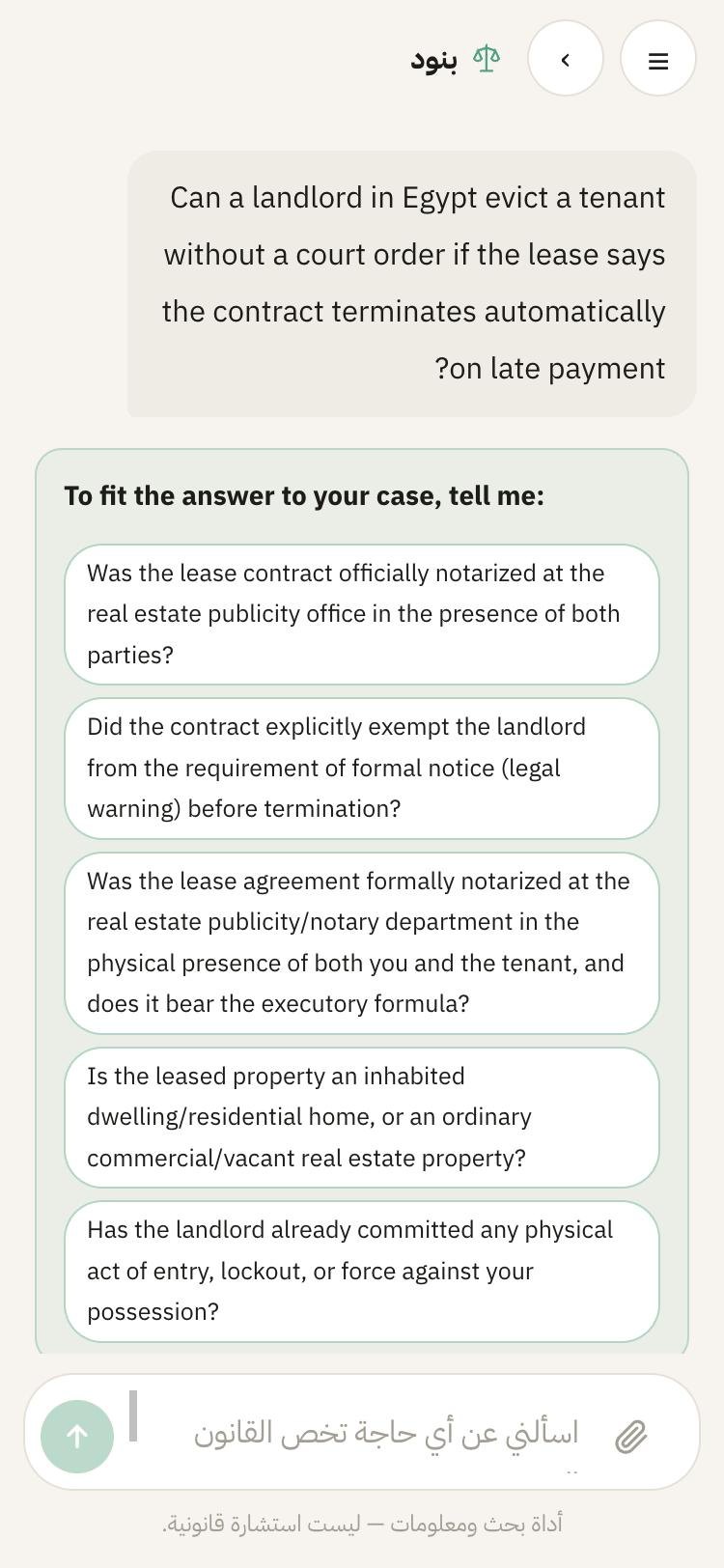
An answer in EnglishAn English question is answered in English; quotes stay in the statute's Arabic
Lawyers first: preparing defences, reviewing a contract, confirming a deadline or a text before a hearing. And citizens who want to know the text before they act. The statute reference, the rulings search and the deadline calculator are open without limit; the chat gives 10 trial questions, then a free account with a daily allowance.
Bnood is an independent Egyptian project started in 2026, built in Egypt for Egypt's lawyers. The database grows branch by branch in the order the law's own cross-references dictate, not the easiest order.
10 questions without an account, then a free account
Try it free →